
PHP Security Alert 2026: How to Protect Your Website from PHP2Shell Vulnerabilities
Discover the critical PHP2Shell vulnerabilities affecting PHP websites in 2026. Learn about security risks, PHP updates, server protection, and practical steps Canadian businesses can take.
 Webespire Consulting3 min read
In this article
- What Is PHP2Shell, and Why Does It Matter?
- How Can PHP Security Vulnerabilities Affect Your Business?
- Which PHP Versions Need Security Updates?
- How to Secure Your PHP Website and Applications
- Does a PHP Upgrade Require Code Changes?
- Why Choose Webespire Consulting for PHP Development Support?
- Conclusion
- Need PHP Upgrade or Website Development Support?
Website security is essential for Canadian businesses that depend on online sales, customer information, and digital services. Recent PHP security concerns highlight why organizations must regularly update their websites, review server configurations, and protect sensitive business data.
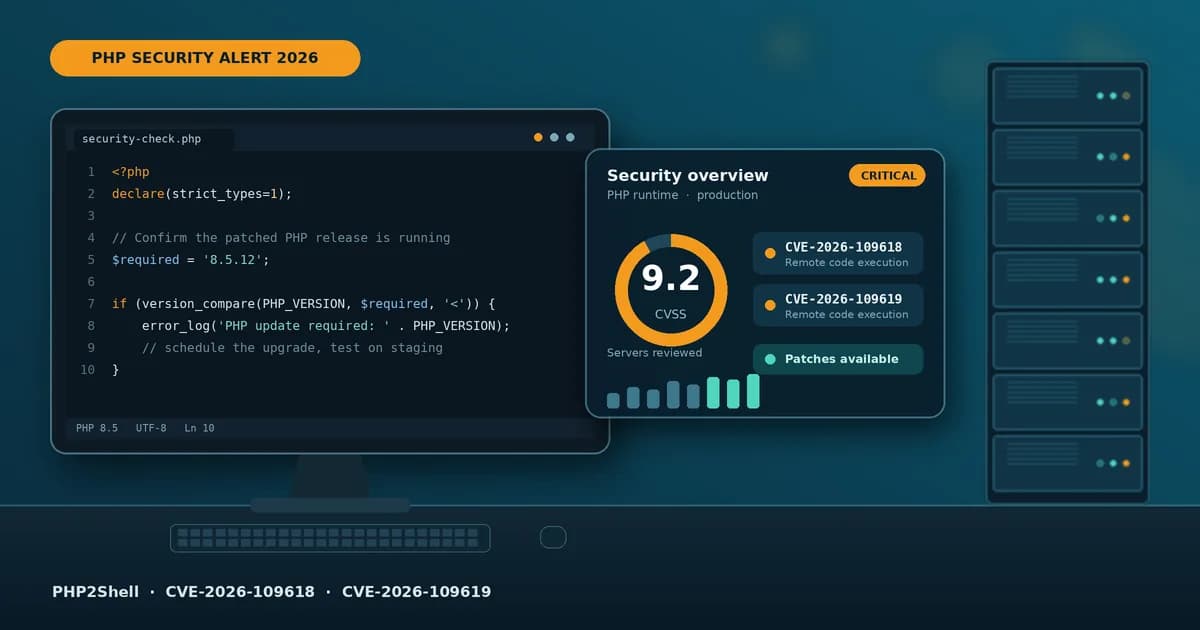
Two critical vulnerabilities, CVE-2026-109618 and CVE-2026-109619, collectively known as PHP2Shell, have raised concerns about the security of PHP-powered applications.
Whether your business operates a WordPress website, WooCommerce store, Laravel application, or custom PHP platform, understanding these vulnerabilities can help you make informed security decisions.
What Is PHP2Shell, and Why Does It Matter?
PHP2Shell refers to two serious vulnerabilities affecting the PHP runtime, the software responsible for executing PHP applications on web servers.
Both vulnerabilities have been assigned a critical CVSS severity score of 9.2.
They involve Remote Code Execution (RCE), a security risk that may allow unauthorized individuals to execute code on vulnerable servers under certain conditions.
Unlike vulnerabilities affecting individual WordPress plugins, these issues concern PHP itself. As a result, different types of PHP-powered websites may require security updates.
However, using PHP does not automatically mean your website has been compromised. The actual risk depends on your PHP version, server configuration, and installed security patches.
How Can PHP Security Vulnerabilities Affect Your Business?
An unpatched PHP environment can expose businesses to significant operational and financial risks.
Customer Data Exposure: A successful security breach may compromise customer information, business records, or application credentials.
Website Downtime: Security incidents can interrupt online services, preventing customers from accessing your website or completing purchases.
Financial Losses: eCommerce businesses may experience lost sales, recovery expenses, and unexpected technical costs.
Reputation Damage: Customers may lose confidence in a business following a serious data security incident.
Compliance Concerns: Canadian organizations must consider applicable privacy obligations, including the Personal Information Protection and Electronic Documents Act (PIPEDA), where relevant.
Taking preventive action can reduce exposure and support business continuity.
Which PHP Versions Need Security Updates?
The PHP development team released emergency security updates on October 21, 2026.
The relevant patched releases include:
| PHP Version | Security Update |
|---|---|
| PHP 8.5 | Upgrade to PHP 8.5.12 |
| PHP 8.4 | Upgrade to PHP 8.4.27 |
| PHP 8.3 | Upgrade to PHP 8.3.36 |
| PHP 8.2 | Upgrade to PHP 8.2.35 |
Businesses using older PHP installations should consult their hosting provider or development team to determine whether a supported upgrade or vendor-maintained security patch is available.
How to Secure Your PHP Website and Applications
Protecting your website requires more than updating a plugin or changing passwords.
1. Check Your PHP Version
Identify the PHP runtime used by your production website and confirm whether the required security updates are installed.
2. Update PHP and Server Software
Install verified security patches and review your hosting environment, operating system, and server configuration.
3. Back Up Your Website
Maintain secure backups of application files, databases, and important configuration settings before making significant changes.
4. Review Website Components
Update WordPress, WooCommerce, Laravel dependencies, themes, and plugins as appropriate.
5. Monitor Suspicious Activity
Review server logs, unusual login attempts, unexpected file changes, and security alerts.
6. Test Before Deployment
Use a staging environment to confirm that PHP upgrades do not disrupt essential website functions.
Does a PHP Upgrade Require Code Changes?
Not every PHP security update requires application code modifications.
However, moving from an older PHP version to a newer major release may require developers to review deprecated functions, database connections, Composer dependencies, and framework compatibility.
Professional compatibility testing helps businesses upgrade securely while minimizing disruption.
Why Choose Webespire Consulting for PHP Development Support?
At Webespire Consulting, we understand the importance of reliable websites and maintainable business applications.
As a Canada-based technology consulting and development company, we work with businesses seeking PHP development, website modernization, application maintenance, and technical upgrade solutions.
Our team can discuss your PHP migration requirements, WordPress or Laravel compatibility concerns, and custom application development needs.
Conclusion
PHP2Shell highlights the importance of keeping website infrastructure secure and up to date.
Canadian businesses should review their PHP environments, apply verified security patches, and establish regular maintenance procedures.
Need PHP Upgrade or Website Development Support?
Connect with Webespire Consulting to discuss your website's technical requirements.
Email: info@webespire.com
Website: https://www.webespire.com/